
Dry Ice Blasting Services
Traditional cleaning methods such as sanding, scraping, grit blasting and chemical cleaning can be messy, abrasive and time-consuming. At NZ Remediation & Restoration Services, we offer Dry Ice Blasting as a modern, non-abrasive cleaning solution for restoration, commercial, industrial and specialist cleaning projects.
Dry ice blasting uses compressed air to propel dry ice pellets onto a surface. On impact, the pellets lift dirt, residue, soot, mould staining, grease, coatings and contamination without leaving blasting media behind. Because dry ice turns directly into gas, the process creates minimal secondary waste and reduces cleanup time compared with many traditional blasting methods.
Get a Quote
Need specialist surface cleaning for fire damage, mould-affected areas, machinery, timber, concrete or commercial spaces? Contact NZRRS to discuss whether dry ice blasting is suitable for your project.
Why Choose Dry Ice Blasting?
Non-Abrasive Cleaning
Dry ice pellets are softer than many traditional blasting materials, making the process suitable for surfaces where aggressive sanding or grit blasting may cause damage. It can help clean surfaces while preserving the underlying material.
Minimal Secondary Waste
Unlike sand, grit or shot blasting, dry ice does not leave blasting residue behind. The dry ice sublimates into gas, leaving only the removed contaminant to be collected or cleaned away.
Suitable for Sensitive Areas
Dry ice blasting can be used across a range of settings, including restoration work, commercial buildings, machinery, equipment, timber, concrete, metal and areas where water or heavy abrasion may not be ideal.
No Harsh Chemical Solvents
Because the process uses dry ice pellets and compressed air, it can reduce the need for chemical-based cleaning methods in suitable applications.
Efficient Restoration Cleaning
Dry ice blasting can assist with removing soot, smoke residue, grime, mould staining, adhesives, grease, paint residue and other surface contaminants, depending on the material and condition of the surface.
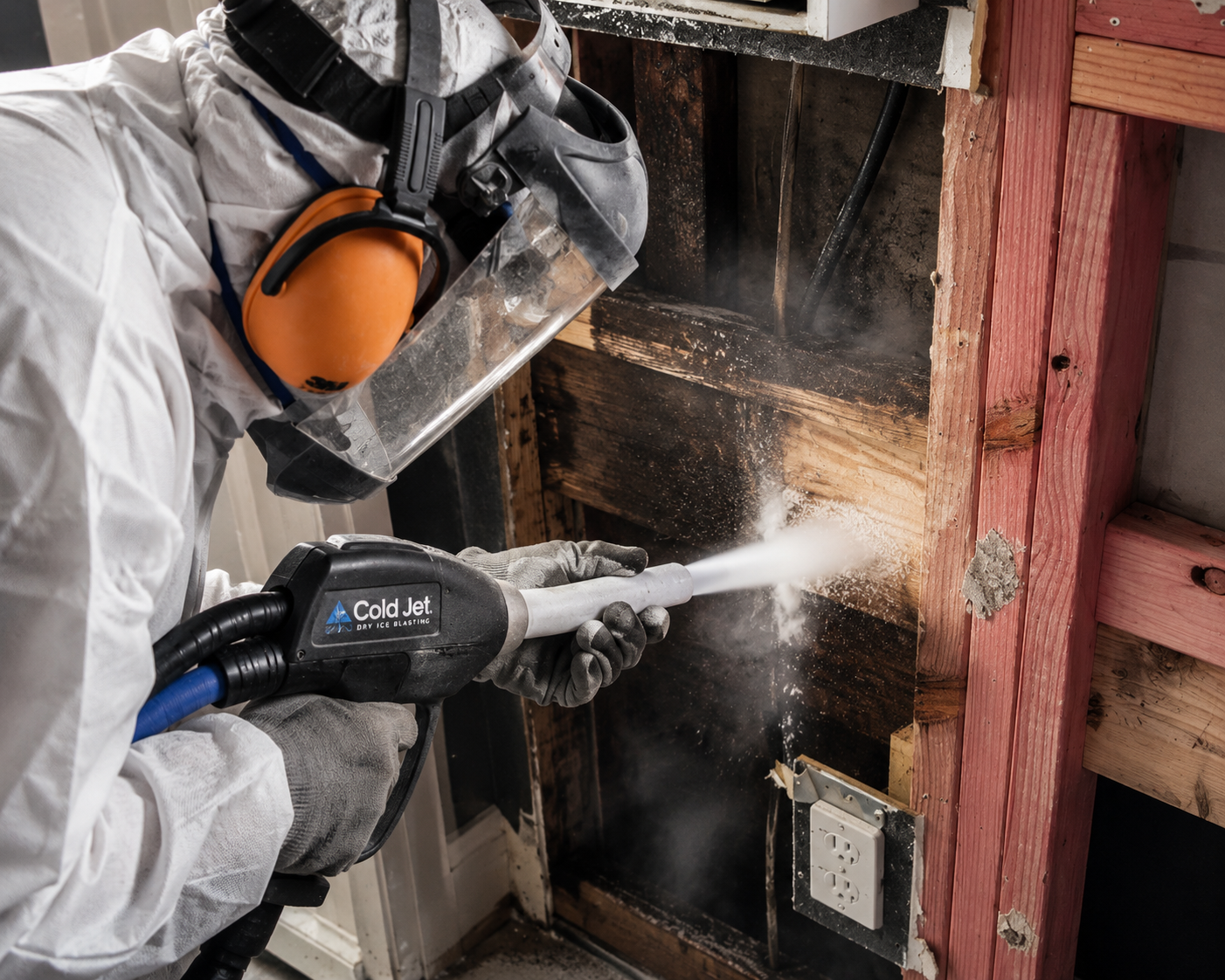
Dry Ice Blasting for Restoration
Dry ice blasting is especially useful in restoration projects where speed, precision and surface protection matter. It can help clean surfaces affected by fire, smoke, mould, contamination, industrial buildup or long-term grime.
At NZRRS, we assess the surface, contamination type and project requirements before recommending a suitable cleaning method. Our goal is to restore the affected area efficiently while reducing mess, damage and downtime.
Where Dry Ice Blasting Can Be Used
Dry ice blasting may be suitable for:
- Fire and smoke damage restoration
- Soot and carbon residue removal
- Mould-affected surface cleaning
- Timber, brick, concrete and metal cleaning
- Machinery and equipment cleaning
- Commercial and industrial cleaning
- Odour-related contamination cleaning
- Restoration of hard-to-reach areas
- Pre-painting or surface preparation in selected cases
Eco-Conscious Cleaning Approach
Dry ice is solid carbon dioxide that changes directly from solid to gas. This means there is no leftover blasting media such as sand, grit, water or slurry. In many situations, this can reduce cleanup time, limit waste disposal requirements and support a cleaner restoration process.
While every job is different, dry ice blasting can be a practical option for projects where low-residue, non-abrasive and efficient cleaning is required.